
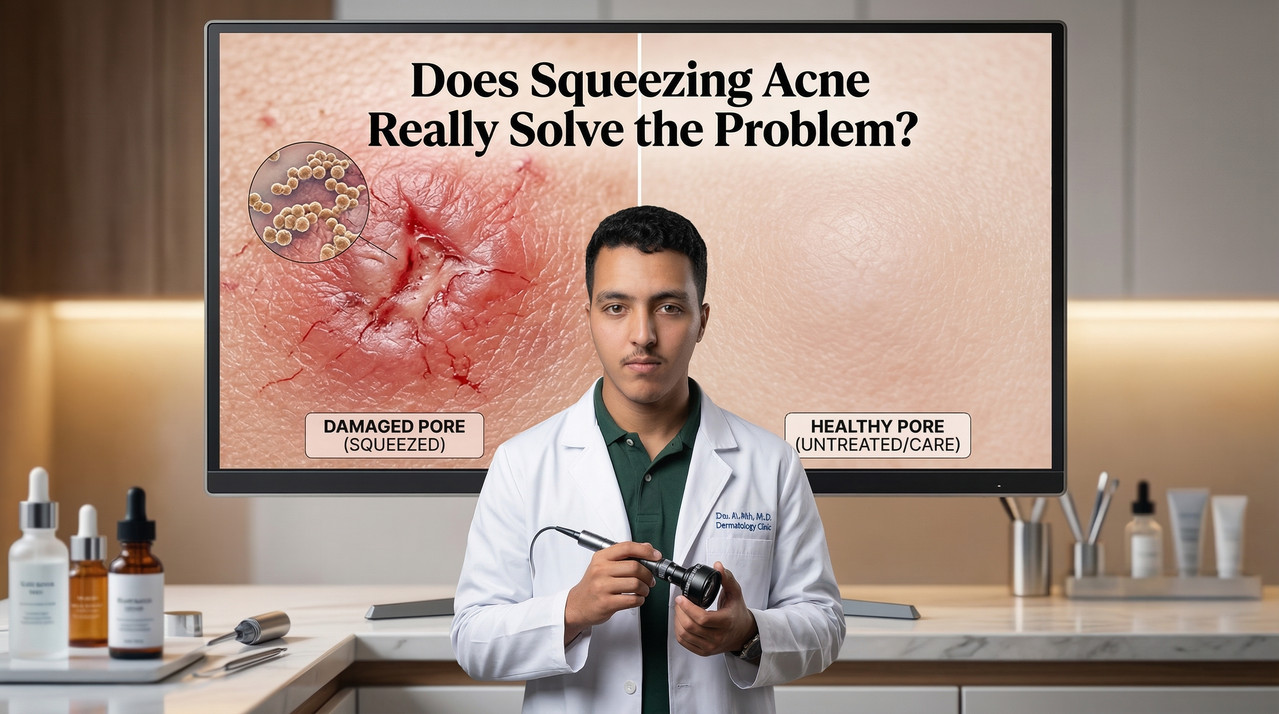
Many people thinks that popping a pimple brings instant relief. But actually, squeezing pimples usually worsen inflammation and can cause scars. This article gonna explain why, and give you practical tips and proven treatment methods, with some sources about ingredients like Benzoyl Peroxide, Salicylic Acid, and Niacinamide.
- Why you shouldn't pop pimples?
- What's inside a pimple?
- Causes of acne
- Proven treatments
- Suggested daily routine
- When to see a dermatologist?
- Practical tips and precautions
1. Why you shouldn't pop pimples?
The white fluid that comes out when you squeeze a pimple isn't some "healing secret" – it's pus, a mix of bacteria, dead cells, and oils. Popping pimples with dirty hands or too much force can:
- Spread bacteria to nearby areas and maybe cause new pimples to appear.
- Increase redness and swelling, making it more painful.
- Damage the skin and lead to scars or dark marks after it heals.

2. What is inside a pimple?
It's mostly pus: dead skin cells, oil (sebum), and C. acnes bacteria. If the pimple is small and has a clear head, maybe a dermatologist can extract it safely. But doing it yourself usually make things worse.
3. The root causes of acne
- Excess oil production from sebaceous glands.
- Clogged pores with dead cells and oil.
- Bacterial growth inside hair follicles.
- Inflammation as your body reacts to trapped bacteria and pus.
- Triggers like hormones, stress, certain medicines, and pore-clogging cosmetics.

4. Scientifically proven treatments
A. Benzoyl Peroxide
Works as antibacterial and mild exfoliant. Used topically in 2.5%-10%. Start low to avoid irritation, or skin might get dry and peel.
B. Salicylic Acid
Oil-soluble BHA that dissolves oils and dead skin cells. Good for blackheads and whiteheads.
C. Niacinamide (Vitamin B3)
Anti-inflammatory, reduce oil production, calm redness, help skin tone and minor scars.
5. Suggested treatment routine
- Morning: Cleanse, Niacinamide serum, SPF 30+.
- Evening: Cleanse, Salicylic Acid product, spot treatment with Benzoyl Peroxide if needed.
- Moisturize to reduce dryness.
- Patience: usually 6-12 weeks to see improvement.
.jpg)
6. When to see a dermatologist?
- Severe cystic acne
- Obvious scars or dark spots
- No improvement after 8–12 weeks
7. Practical tips and precautions
- Avoid touching face and picking pimples.
- Patch test new products first.
- Be careful mixing ingredients.
- Start with lower concentrations.
- If allergic reaction occurs, stop and see a specialist.
thanks for help 😣
ReplyDelete